Decouple the data from the artefact
For branded, template-heavy outputs like decks and dashboards, keep the artefact out of the model entirely: strip its data to JSON, let the agent update only that, and plug it back into the untouched shell.
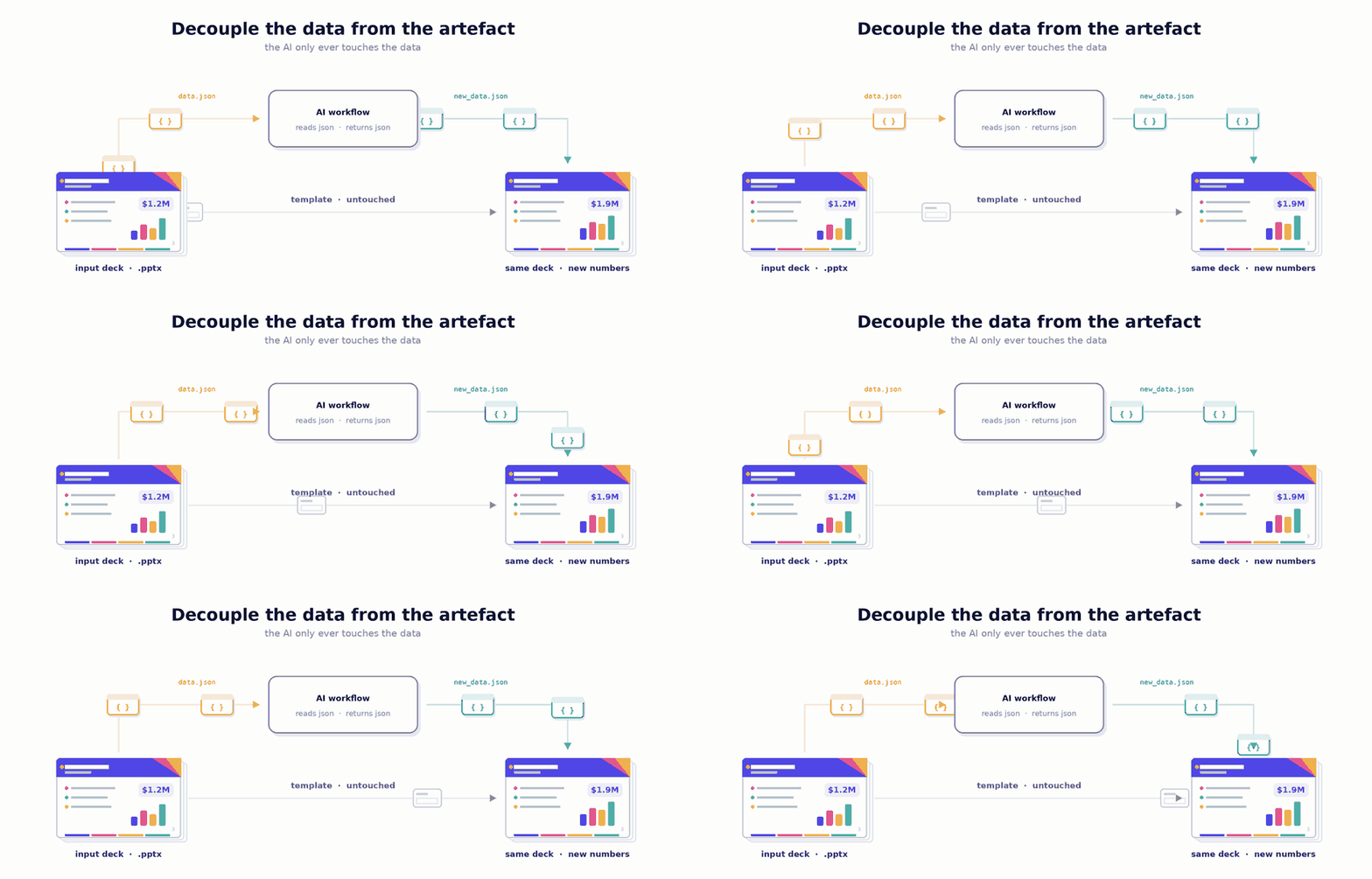
AI engineers often get handed use cases that are heavy on layout, styling and branding: decks, monthly reports, dashboards, PDFs. The instinct is to hand the whole thing to the model and hope the prompt is strict enough.
The real question is whether to let the AI build it from scratch at all, given how stochastic these models are. Even with templates, style guides and strict instructions, something always drifts: a font, a spacing, a colour. For a monthly report or dashboard, consistency is the whole point, and style guides and guardrails only get you so far. You’re still fighting the generation step every cycle.
What worked far better: decouple the data from the artefact.
If the artefact has a fixed structure, treat it as a shell.
- Take the existing file as input.
- Strip its content out into a JSON object.
- Let the agentic workflow do the real work (analysis, computation, summarisation) and return a new JSON in the same schema.
- Plug that JSON back into the untouched shell at the end of the pipeline.
The artefact never goes through the model. It just gets carried along the workflow and comes back out with new data in it. Same branding. Same layout. New numbers. Every single time.
A nice side effect: failures become data bugs you can validate against a schema, not broken decks you have to eyeball.